
Growing Minds in a Digital Age: Finding Balance for Our Children

As a mom of three, I understand how hectic life can get and how having a moment to breathe can feel almost non-existent. Before we had children, my husband and I decided that technology was not going to form part of our children’s daily lives. We put in place a lot of different solutions to help “keep our children busy,” like reading books, creating play stations, and encouraging hands-on exploration.
With this said, I am not against technology—I understand it has its place. In our home, we do occasionally have a family movie night or allow our children to watch an appropriate show here and there, but it never forms part of our everyday rhythm. It’s always the last resort, not the default.
Screens can feel like a lifeline for parents. They keep children quiet, entertained, and sometimes even offer a sense of “educational content.” But growing research—and years of wisdom from educators like Montessori—reminds us that too much screen time can quietly interfere with how children grow, learn, and thrive. This blog is not about blame or guilt. It’s about offering encouragement, understanding, and practical alternatives for families.
"too much screen time can quietly interfere with how children grow, learn, and thrive."
Why Movement Matters More Than Screens
Decades of research show that children learn through movement. Maria Montessori strongly believed that children learn best when their bodies are active, when they can explore, and when their learning is hands-on—not by sitting still or doing worksheets. Reggio Emilia and Waldorf philosophies echo this truth, emphasising play, creativity, and real-world experiences. Forest School takes it even further, bringing learning back into nature where children are free to climb, dig, and discover.
Yet in many homes today, we’ve replaced this movement model with screens and called it “education.” But children don’t learn deeply through passive watching. They learn through doing, by stacking blocks, digging in soil, running, painting, asking questions, and exploring the world around them.
"We’ve replaced this movement model with screens and called it 'education.' "
Even more concerning, neuroscience is beginning to show that excessive screen time in early childhood may affect brain development:
A study of preschoolers (ages 3–5) found that children who exceeded recommended screen-time limits had lower white matter integrity in the brain, particularly in areas associated with language and literacy. This translated into weaker expressive vocabulary and emergent reading skills. (Hutton et al., 2019, JAMA Pediatrics)
Other studies suggest that heavy screen use in young children is associated with delays in social-emotional development and reduced attention spans (Christakis, 2019).
In short, when children spend too much time on screens, they lose precious hours of real-life play and interaction—the very things their brains need to grow strong and resilient.
Learning Starts with Us
Children watch us. If we constantly reach for our phones instead of a book, a hobby, or even a conversation, they will learn to do the same. It starts with us. Let’s put the screens away and model curiosity, reading, movement, and creativity.
For me, that meant learning to accept the mess that comes with play. This is their home too, and their mess is allowed—within healthy boundaries. I started keeping just a small basket of toys in the living room for easy clean-up. When boredom set in, I rotated toys to keep things engaging.
"This is their home too, and their mess is allowed"
We also have a family rule: if the sun is up, outside play is a go. We are fortunate to have outdoor space, and while we invested in a jungle gym, my children’s favourite activity is gardening. I created a child-friendly garden for them—a space to dig, plant, and get muddy. It’s messy, yes, but it’s also science, sensory exploration, and joy rolled into one.
Indoors, art is another favourite. Mess-free art supplies are helpful, but nothing beats traditional paint and a brush. Sometimes we paint specific projects, other times we simply explore. The more they practice, the less messy it becomes. The point isn’t the final product, but the process.
Sensory play is another powerful alternative. Homemade playdough with herbs, glitter, or natural materials like leaves and sticks gives children quiet focus and endless creativity. They can also create pots that can dry and be painted on later.
And then there are puzzles and games. As someone who loves education and sells educational games and toys, this is a great tool for problem-solving and teamwork. My older two love working together on puzzles and have even started inventing strategies to finish them faster.
But perhaps our most cherished activity is reading. Even as toddlers, my children could spend hours flipping through books and soaking up stories. We started with a small basket of books, and over the years we’ve grown our collection. Each book, old or new, has become a favourite memory of connection and curiosity.
Connection Before Anything Else
Even with the best activities, sometimes nothing seems to work. That’s often a signal that my children’s love tank is running low.
When they are clingy, fighting, or melting down, it’s usually not about the toys—it’s about connection. That’s when I pause, set everything else aside, and focus on them. Sometimes it’s a cuddle on the couch, sometimes it’s drawing together, or just talking. Love always resets the day.
"That’s when I pause, set everything else aside, and focus on them"
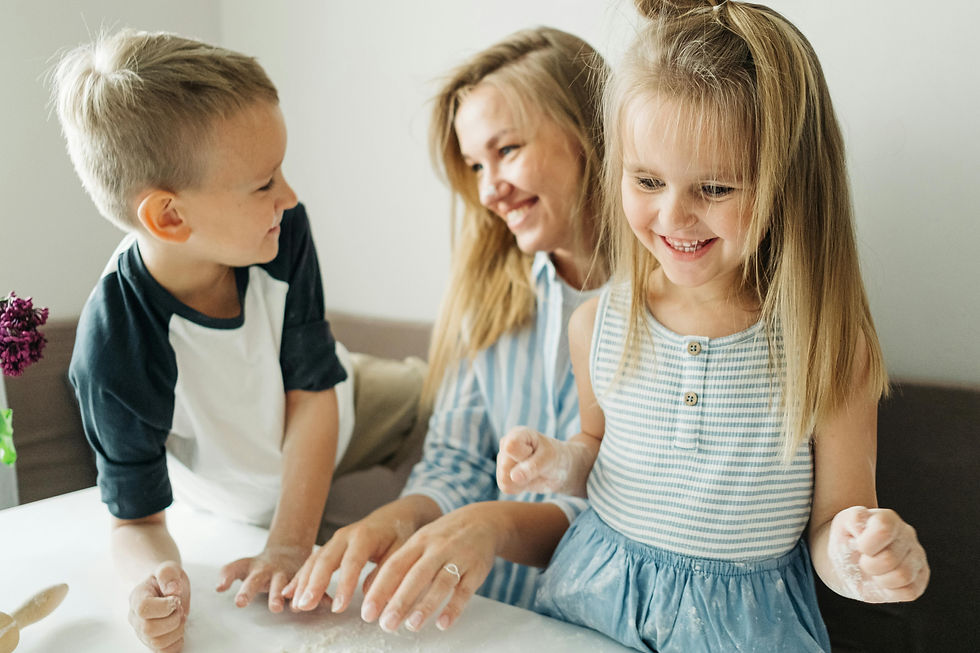
And connection doesn’t always mean sitting down for a “special” moment. My children love to simply be with me. When I clean, they clean. When I cook, they cook. I hand them cloths, small tasks, or safe kitchen jobs—mashing potatoes, sprinkling spices, or chopping vegetables. These moments keep them busy, build life skills, and teach maths, science, and language most naturally.
Learning isn’t separate from life. It is life.
A Final Word of Encouragement
As parents, it helps to pause and remember why we have children. It is an opportunity to raise them with love, to nurture their gifts, and to guide them into becoming decent, kind, capable human beings.
Technology can easily keep us apart—even our own use of it can become detrimental if it takes us away from connection. But when we shift our focus back to love, play, and practical living, we give our children what they truly need.
Let’s raise children who are curious, confident, and real problem-solvers—children who know that they are deeply loved and capable of great things.
Reference:
Christakis, D. A. (2019). The challenges of defining and studying “digital addiction” in children. JAMA Pediatrics, 173(10), 925–926.
Hutton, J. S., Dudley, J., Horowitz-Kraus, T., DeWitt, T., & Holland, S. K. (2019). Association between screen-based media use and brain white matter integrity in preschool-aged children. JAMA Pediatrics, 174(1), e193869.
Montessori, M. (1967). The Absorbent Mind. Holt, Rinehart and Winston.
Edwards, C. P., Gandini, L., & Forman, G. (1998). The Hundred Languages of Children: The Reggio Emilia Approach. Ablex Publishing.
Rawson, M., & Richter, T. (2000). Waldorf Education: An Introduction. Rudolf Steiner Press.
Knight, S. (2013). Forest School and Outdoor Learning in the Early Years. Sage Publications.

Comments